Treatment Options
How can we reverse the effects of Fragile X Syndrome?
If you found yourself on this page from the mechanisms page, welcome! If you stumbled here before reading the mechanisms page, it may be helpful to start here to gather some background information helpful in understanding the mechanisms behind some of these treatment options.
If you’re here to find out how that proton leak talked about here can be fixed, you’ll get your answer now! Griffiths et al. found that a deficiency in Coenzyme Q causes the large proton leak, so giving FMR1 knockout mice more Coenzyme Q should help, right? Yes! It was that simple. Remember that mPTP was the channel responsible for the leak. Ubiquinone analogs were already known to regulate mPTP opening and closing. Griffiths et al. first tested CoQ1, a ubiquinone analog, on newborn forebrain mPTP. They found that it did indeed inhibit mPTP in newborn forebrain mitochondria. They then tested its effects on fixing the proton leak in FMR1 knockout mice. CoQ1 immediately increased and stabilized the mitochondrial membrane potential and decreased oxygen consumption (Griffiths et al., 2020). This indicates that CoQ1 was capable of blocking the proton leak!
Griffiths et al. then wanted to observe the effects that CoQ10 had on Fragile X Syndrome phenotypes, since this is the specific deficient quinone species in FMR1 knockout mice. They found that the highest dosage of CoQ10 that they injected restored ubiquinone levels to control values. CoQ10 also normalized body temperature, indicating that the proton leak was not excessively uncoupled anymore. Lower lactate to pyruvate ratios were also observed upon injection of CoQ10, indicating restoration of mitochondrial coupling (Griffiths et al., 2020). They also observed that blocking the leak with CoQ10 restored protein synthesis rates to a normal level. In terms of the effect of CoQ10 on dendrite formation, it increased the number of dendrites and they resembled the morphology of dendrites of mature, wild-type mice. CoQ10 injection was also found to reverse some of the behavioral phenotypes associated with Fragile X Syndrome. It was found to reduce hyperactivity and repetitive behaviors, but it had no effect on stimulus sensitivity or social interaction (Griffiths et al., 2020).
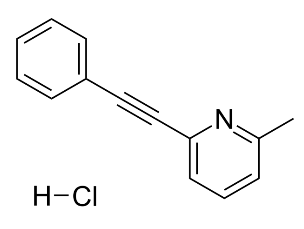
The absence of FMRP is known to overactivate mGluR5 and ERK1/2, which is discussed here. Osterweil et al. observed that adding the mGluR5 antagonist, MPEP, normalized protein synthesis levels in FMR1 knockout mice. Thus, MPEP has been shown to block mGluR-LTD, which Sharma et al. found is responsible for cells favoring proliferation over differentiation (Sharma et al., 2010). Osterweil et al. were the first people to demonstrate that excessive protein synthesis in the hippocampuses of FMR1 knockout mice could be rapidly corrected by acute pharmacological inhibition of mGluR5. Since mGluRs typically activate ERK1/2, but mGluR5 can be inhibited, they hypothesized that directly inhibiting ERK1/2 could also reduce excessive protein synthesis in FMR1 knockout mice. They used U0126, a MEK1/2-ERK1/2 inhibitor, to show that inhibition of ERK1/2 did indeed normalize protein synthesis levels (Osterweil et al., 2010).
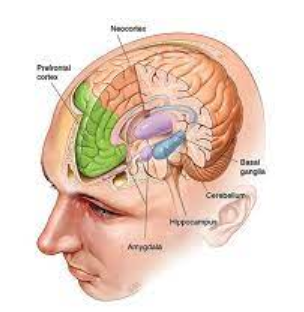
While mGluR inhibitors proved effective in the hippocampus and neocortex at reversing some Fragile X Syndrome phenotypes, Fernandes et al. found that the opposite is true in the amygdala – activation of mGluRs reversed deficient synaptic transmission and plasticity, which reversed some Fragile X Syndrome phenotypes. Individuals with Fragile X Syndrome have previously been found to have impaired recall of conditioned fear, which inspired Fernandes et al. to study the role of the amygdala in Fragile X Syndrome, since most prior research was done on the hippocampus and neocortex. Their findings of mGluR activation reversing Fragile X Syndrome in the amygdala urged Fernandes et al. to call for a modification in the way mGluR inhibitors are used to treat Fragile X Syndrome to include circuit-specific differences (Fernandes et al., 2021).
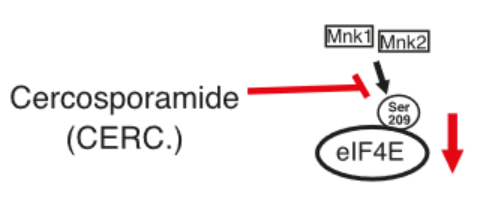
Another point of inhibition that has proven successful in treating Fragile X Syndrome in mouse models is Mnk1/Mnk2. Cercosporamide is known to be an inhibitor of Mnk1/Mnk2 kinases. They have been shown to decrease cancer cell proliferation in certain carcinomas, so they may be able to decrease cell proliferation in Fragile X Syndrome, as well. Indeed, a single injection of cercosporamide decreased phosphorylated eIF4E levels in wild-type mice, which as discussed here is known to regulate MMP-9, which affects dendrite morphology and social interaction (Gkogkas et al., 2014). As expected, MMP-9 levels also decreased upon injection with cercosporamide. In addition, cercosporamide treatment decreased mGluR-LTD. It was also found to completely reverse autism spectrum disorder-like behavioral phenotypes such as reduced sociability, aggression, repetitive behaviors, and hyperactivity in FMR1 knockout mice. It did not improve motor coordination or novel object recognition tests, nor reverse the macroorchidism phenotype (Gkogkas et al., 2014).
The absence of FMRP is also known to increase the PI3K signaling pathway, as discussed here. A way to treat Fragile X Syndrome would then be to inhibit part of the PI3K signaling pathway. Raj et al. found that TGX-221, a p110β subunit-specific inhibitor, returned protein synthesis to normal levels in Fragile X Syndrome patient-derived neural progenitor cells. The p70 ribosomal S6 kinase (S6K1) signaling pathway has also been known to be dysregulated in Fragile X Syndrome, so Raj et al. also tested the efficacy of PF-4708671, an S6K1 inhibitor, in treating Fragile X Syndrome. They found that this inhibitor also returned protein synthesis to normal levels in Fragile X Syndrome patient-derived neural progenitor cells (Raj et al., 2021). Although previous research had already shown that p110β inhibition corrected synaptic defects in FMR1 knockout mice postmitotic neurons, Raj et al. found that intervention of the PI3K signaling pathway may be more efficient when done at a certain developmental time point (Raj et al., 2021).
After reading all these treatment options that have to selectively target certain molecules in different pathways, you may be wondering, “Why couldn’t you just put FMRP in people with Fragile X Syndrome?” People did try that and failed. Peier et al. wanted to see what happened when a yeast artificial chromosome containing the FMR1 gene was introduced into FMR1 knockout mice. Knockout mice with no YAC inserted displayed increased anxiety. When the YAC was introduced into knockout mice, the mice still had high levels of anxiety as well as hypoactivity. Overexpression of FMRP may also reduce viability. The adverse side effects of too much FMRP prohibits genetic correction of FMRP deficiency in Fragile X Syndrome patients (Peier et al., 2000).
We have come a long way since then in finding new treatments for Fragile X Syndrome, and the search is far from over! If you would like to dive deeper into any papers discussing Fragile X Syndrome in its historical context, click here.
Works Cited
Fernandes, G.; Mishra, P. K.; Nawaz, M. S.; Donlin-Asp, P. G.; Rahman, M. M.; Hazra, A.; Kedia, S.; Kayenaat, A.; Songara, D.; Wyllie, D. J. A.; Schuman, E. M.; Kind, P. C.; Chattarji, S. Correction of Amygdalar Dysfunction in a Rat Model of Fragile X Syndrome. Cell Reports2021, 37 (2), 109805. https://doi.org/10.1016/j.celrep.2021.109805.
Gkogkas, C. G.; Khoutorsky, A.; Cao, R.; Jafarnejad, S. M.; Prager-Khoutorsky, M.; Giannakas, N.; Kaminari, A.; Fragkouli, A.; Nader, K.; Price, T. J.; Konicek, B. W.; Graff, J. R.; Tzinia, A. K.; Lacaille, J.-C.; Sonenberg, N. Pharmacogenetic Inhibition of EIF4E-Dependent Mmp9 MRNA Translation Reverses Fragile X Syndrome-like Phenotypes. Cell Reports 2014, 9 (5), 1742–1755. https://doi.org/10.1016/j.celrep.2014.10.064.
Griffiths, K. K.; Wang, A.; Wang, L.; Tracey, M.; Kleiner, G.; Quinzii, C. M.; Sun, L.; Yang, G.; Perez-Zoghbi, J. F.; Licznerski, P.; Yang, M.; Jonas, E. A.; Levy, R. J. Inefficient Thermogenic Mitochondrial Respiration Due to Futile Proton Leak in a Mouse Model of Fragile X Syndrome. The FASEB Journal 2020, 34 (6), 7404–7426. https://doi.org/10.1096/fj.202000283RR.
Osterweil, E. K.; Krueger, D. D.; Reinhold, K.; Bear, M. F. Hypersensitivity to MGluR5 and ERK1/2 Leads to Excessive Protein Synthesis in the Hippocampus of a Mouse Model of Fragile X Syndrome. J Neurosci2010, 30 (46), 15616–15627. https://doi.org/10.1523/JNEUROSCI.3888-10.2010.
Peier, A. M.; McIlwain, K. L.; Kenneson, A.; Warren, S. T.; Paylor, R.; Nelson, D. L. (Over)Correction of FMR1 Deficiency with YAC Transgenics: Behavioral and Physical Features. Human Molecular Genetics 2000, 9 (8), 1145–1159. https://doi.org/10.1093/hmg/9.8.1145.
Raj, N.; McEachin, Z. T.; Harousseau, W.; Zhou, Y.; Zhang, F.; Merritt-Garza, M. E.; Taliaferro, J. M.; Kalinowska, M.; Marro, S. G.; Hales, C. M.; Berry-Kravis, E.; Wolf-Ochoa, M. W.; Martinez-Cerdeño, V.; Wernig, M.; Chen, L.; Klann, E.; Warren, S. T.; Jin, P.; Wen, Z.; Bassell, G. J. Cell-Type-Specific Profiling of Human Cellular Models of Fragile X Syndrome Reveal PI3K-Dependent Defects in Translation and Neurogenesis. Cell Rep 2021, 35 (2), 108991. https://doi.org/10.1016/j.celrep.2021.108991.
Sharma, A.; Hoeffer, C. A.; Takayasu, Y.; Miyawaki, T.; McBride, S. M.; Klann, E.; Zukin, R. S. Dysregulation of MTOR Signaling in Fragile X Syndrome. J. Neurosci. 2010, 30 (2), 694–702. https://doi.org/10.1523/JNEUROSCI.3696-09.2010.

Hey Paige! This was really fascinating! I took a brief look at the Griffiths et al 2020 publication you linked – I think this concept of partially uncoupled OXPHOS forcing the cell to increase glycolytic flux for ATP production is really brilliant, as the combination of fully functional ETC complexes and a huge increase in lactate production/L:P ratios are not two phenotypes that typically occur together. It’s really cool that they were able to find such a simple fix in CoQ treatment, especially since this is a supplement already widely available (and used for the treatment of many mito deficiencies!). You mention, though, that while CoQ treatment restored mitochondrial coupling and other molecular phenotypes to control levels, it did not ameliorate all of the behavioral phenotypes associated with Fragile X Syndrome. I assume this is due to remaining deficits in other affected pathways, such as PI3K signaling. Have there been any studies attempting combinatorial treatment targeting two or more of these pathways at once? Do you have any reason to believe that this would or would not work? Additionally, do you have any thoughts as to why the hyperactivity and repetitive behavior phenotypes specifically were rescued by CoQ treatment, as opposed to the others mentioned?
Hi, Miranda! Thanks for your interest in this topic! The Osterweil et al., 2010 paper found that inhibition of either mGluR5 signaling or ERK1/2 signaling leads to normal protein levels since these pathways are both involved in protein production. Only one protein production pathway has to be inhibited. I did not come across any papers in my initial literature search about treating multiple pathways. You pose a great question about combination therapies because when I searched for papers regarding this topic, I found that this area of research is very new in Fragile X Syndrome research. A paper from January of this year reports the first results of a clinical trial that used combination therapy to treat Fragile X Syndrome using lovastatin and minocycline, which were both already known to improve Fragile X Syndrome independently in different pathways. The clinical trial worked and showed that the combination of drugs is safe and effective, and they are now going to move onto a larger clinical trial! This seems to be a new area of research of Fragile X Syndrome, which will probably start to boom in years to come. I think that combination treatment will work as long as it it combining two drugs that act in very different pathways that affect Fragile X Syndrome like in the clinical trial described since there should be no interference. However, there may be adverse side effects if an mGluR5 inhibitor and ERK1/2 inhibitor are combined and decrease translation too much from inhibiting two pathways that regulate protein production.
I think your assumption that CoQ treatment didn’t ameliorate all behavioral phenotypes because some are caused by other pathways is the reason why CoQ treatment only reduced hyperactivity and repetitive behaviors and not stimulus sensitivity or social interaction. The Osterweil et al., 2010 paper also found that inhibition of the ERK1/2 signaling pathway eliminated audiogenic seizures in FMR1 knockout mice, which would be a kind of stimulus sensitivity. Thus, they found that another pathway is responsible for that phenotype, so I think that is the reason that not all phenotypes are reversed by one treatment. There are many affected pathways in Fragile X Syndrome. I don’t have sound reasoning for why CoQ treatment specifically rescued activity-associated phenotypes, but I think it may have something to do with the fact that CoQ is essential for ATP production, which you know supplies energy for movement. I think there is probably a link between abnormal ATP production and activity levels.
What are your thoughts on using medications to “cure” diseases in children? There are mixed emotions on this subject. As a teacher, I firmly believe that medications should be used. I have seen the difference in students who are on medication as opposed to those who aren’t. I’m wondering if during your research that you found evidence where it does more harm than good to medicate.
Hi, Mom! Treatment options are typically tested in animal models such as mice before they move on to human clinical trials. Any papers that tested a drug and found that it didn’t work or had adverse side effects in animal models don’t move onto a further testing stage in humans. Those papers get published because failures in science are just as important as the successes! Knowing a certain treatment option doesn’t work and publishing those findings prevent other research groups from wasting their time testing that same treatment option. Thus, I don’t think there are times when medicating does more harm than good.
I think using medication to treat diseases in children should be determined on a case-by-case basis. If their disease is severely impacting their school performance or daily life, then I think they should consider treatment options to have a more “normal” experience. If their disease doesn’t seem to have much of an impact, then it may not be necessary to spend money on drugs for treatment or having to hold a child accountable to remember to take their medication everyday. I also believe that what a person decides to do with their body is ultimately their choice. If a family doesn’t want their child taking medications for religious or other reasons, I think that is their choice.
Hey Paige Jones. Your website was really interesting! I had a question about the drug you provided, MPEP. Specifically, if anyone has pharmacokinetic information on the drug and how it binds. I notice the drug really only has one portion that has some level of polarity to it, so how exactly would it interact with mGluR5 to inhibit it?
Hi, David! I’m glad you enjoyed exploring my website! The first paper to test MPEP as an mGluR5 antagonist is linked here if you want to read more about it. They found that MPEP inhibited quisqualate-induced phosphoinositide hydrolysis with an IC50 value of 36nM and a Hill coefficient of 0.85. An IC50 value is the minimal concentration of a drug needed for 50% inhibition. Since the Hill coefficient is less than 1, it means that MPEP binds with negative cooperativity. This paper found that MPEP acts as a negative allosteric modulator binding at transmembrane domains. This could explain why MPEP is largely nonpolar – it works in a nonpolar region.
Hey Paige !! Great job! I was wondering if you can expand more about the YAC gene and it’s relationship with FMRP? Why does it cause anxiety to increase?
Hi, Chika! Thank you for your interest in my project! I would love to expand upon this point. The YAC itself is not a gene. YACs serve as a vehicle to introduce a gene into an organism, similar to what a plasmid does, but larger sequences can be cloned into it than in a plasmid. Peier et al. cloned the FMR1 gene along with large flanking sequences into the YAC as a way to introduce the FMR1 gene in FMR1 knockout mice. Introducing the FMR1 gene in this way caused higher levels of anxiety because too much FMRP protein was produced and led to adverse effects. This suggested that there is a sweet spot of levels of FMRP that needs to be attained to get rid of phenotypes associated with the disease.